What Is Mutton-Fat White Jade (Yangzhi Bai)?
What is mutton-fat white jade (yangzhi bai)? Learn how to recognise the warm, dense white tone prized in Hetian jade and why it commands the highest prices.
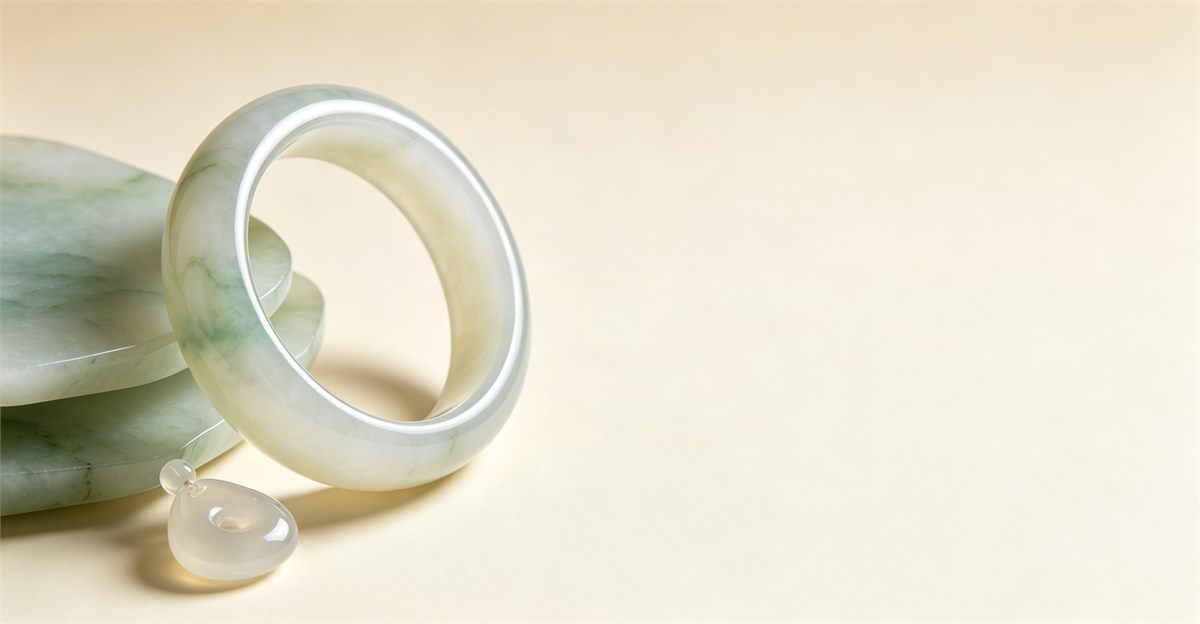
Mutton-fat white jade, yangzhi bai in Chinese, is the tone collectors use as the reference for the finest Hetian jade: a dense white with the warm, oily lustre of rendered mutton fat, never chalky or grey. Because the name is valuable, it is also widely misused — so the label alone proves nothing.
What mutton-fat white means
The term describes three things together: a white base, a soft greasy lustre, and a dense structure that lets a little light through without turning glassy. The effect is warm and calm, closer to candle wax than to paper.
Ordinary white jade can look dry, slightly grey or translucent like glass. Mutton-fat white sits in the narrow band that avoids all three.
How it is judged
Judgement starts with density: the stone should feel solid for its size. Then lustre: it should look softly oily even before polishing. Then evenness of tone and the absence of distracting cotton, cracks or dark specks.
Daylight is the honest judge. Stones that look perfect under warm shop lights can reveal grey or green casts at a window, so always ask for daylight photographs.
Why it commands the highest prices
True mutton-fat material is scarce: only a small share of white nephrite meets all three tests. Combined with China\u2019s centuries-old preference for white jade, that scarcity makes top pieces far more expensive than ordinary white jade.
Carving matters too. Masters reserve their best work for the best stones, so a fine mutton-fat piece usually also carries better design and finishing.
Buying without being misled
The word yangzhi bai is used loosely across the market. Ask whether a certificate describes the piece in those terms, request daylight photos of the exact stone, and compare it side by side with ordinary white jade before paying a premium.
A seller who can explain why this stone — not a similar one — earns the name, and who stands behind it with verifiable documents, is worth far more than a label.
This guide is general buying education. It is not an independent laboratory report or an appraisal. Confirm the facts of the individual piece before payment.
Frequently Asked Questions
What does yangzhi bai mean?
It means mutton-fat white in Chinese. It describes the ideal white Hetian jade: dense, warm, softly translucent and oily in lustre, like rendered mutton fat rather than chalk.
Why is mutton-fat jade so expensive?
Very little nephrite meets all the tests of density, lustre and even white tone at once, and white jade has been the most admired colour in Chinese culture for centuries. Scarcity plus demand sets the price.
How can I tell mutton-fat from ordinary white jade?
Compare in daylight: mutton-fat looks warm and waxy, while ordinary white can look dry, grey or glassy. A verifiable certificate and a seller who can explain the difference help confirm it.
Is mutton-fat jade always from Xinjiang?
The term describes quality, not a legal origin. Traditionally it refers to Xinjiang Hetian material, but the word is used loosely, so confirm the described origin and certificate for the individual piece.