The History of Hetian Jade and Why Chinese Culture Values Jade
Why does Chinese culture value jade? From Hongshan and Liangzhu to the imperial court, the history of Hetian jade and the meaning of wearing jade.
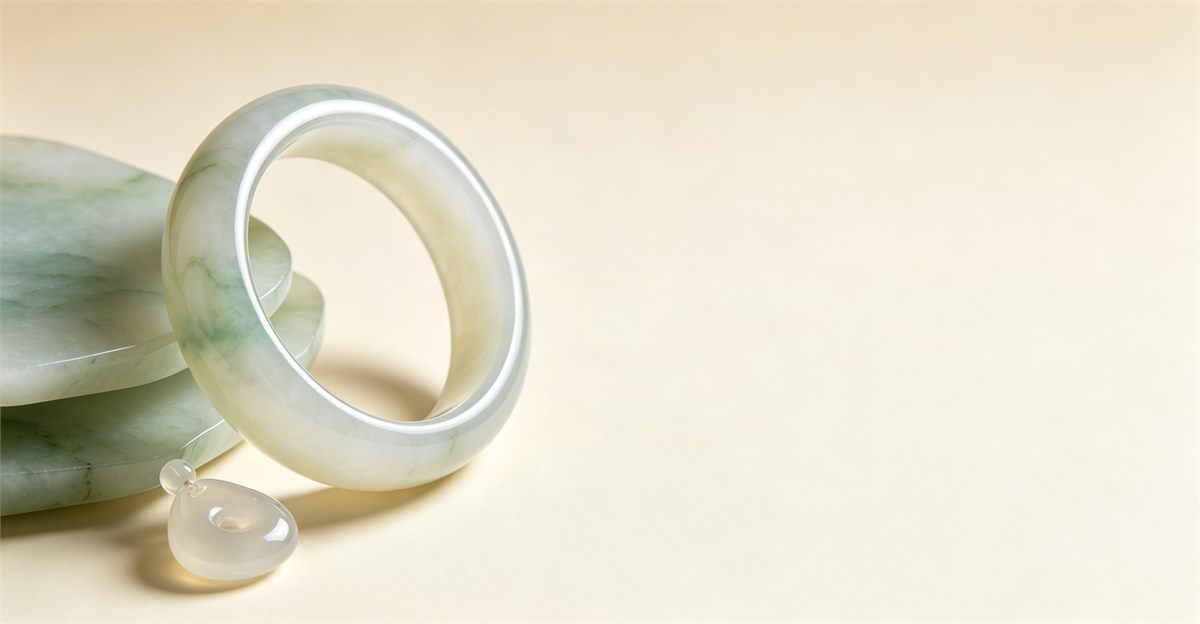
Jade has been carved in China for thousands of years, and Hetian nephrite became its reference stone. The tradition rests on two ideas: that jade is beautiful and tough, and that its qualities mirror the virtues a person should cultivate.
The first jade cultures
The Hongshan and Liangzhu cultures, thousands of years before the first dynasty, were already carving jade into ritual objects: coiled dragons, discs called bi and tubes called cong. The skill and the symbolism were established long before writing recorded them.
From the start, jade was not ordinary ornament. It was used in burial rites and ritual exchange — a material for communicating with ancestors and heaven.
Imperial jade and the jade road
By the imperial era, Hetian jade was court material: seals of state, ritual sets, ornaments and scholar objects. Supply routes from Xinjiang — sometimes called the jade road — fed workshops that served emperors for two thousand years.
The imperial preference for white, flawless Hetian stone fixed the taste that still guides collectors today, including the love of mutton-fat white.
Jade and virtue
Confucian tradition compared jade to the qualities of a cultivated person: its warmth to benevolence, its polish to knowledge, its density to integrity. The saying "a gentleman wears jade" turned the stone into a daily reminder of conduct.
That is why jade is given at important moments — not merely as jewellery, but as a statement about the character wished for the wearer.
Jade today
Modern buyers wear and collect Hetian jade for the same reasons layered together: beauty, toughness, heritage and meaning. A peace buckle or a mutton-fat plaque is a small piece of that long history.
Understanding the history changes how a piece is chosen. It is the difference between buying a stone and receiving a tradition.
This guide is general buying education. It is not an independent laboratory report or an appraisal. Confirm the facts of the individual piece before payment.
Frequently Asked Questions
How old is Chinese jade carving?
Jade has been carved in China for at least seven to eight thousand years, with the Hongshan and Liangzhu cultures producing ritual carvings long before the first dynasties.
Why is jade compared to virtue?
Confucian tradition saw jade\u2019s warmth, polish and density as mirrors of benevolence, knowledge and integrity, making the stone a symbol of cultivated character.
What are bi and cong?
Bi is a flat ritual disc with a central hole; cong is a squared tube. Both are ancient ritual jade forms from early Chinese cultures.
Is Hetian jade still used today?
Yes. It remains the reference stone of Chinese jade culture, carved into pendants, bangles, plaques, sculptures and hand pieces for wearing, gifting and collecting.